
1. Initial Installation
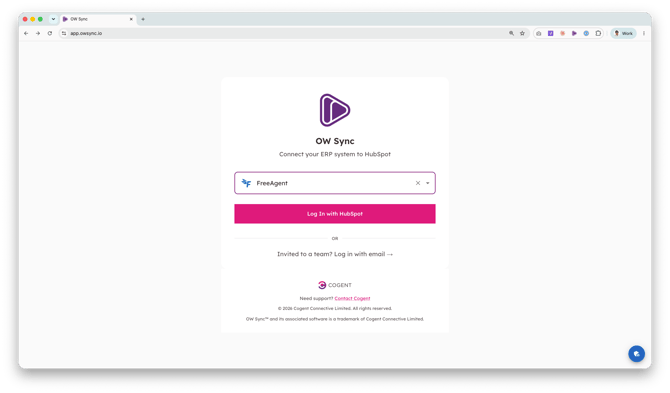
- Install OW Sync - FreeAgent Connector from the official installation flow. On the OW Sync landing page, open the "Search for your ERP..." dropdown and select FreeAgent ("Two-way sync between FreeAgent & HubSpot"), then click Log In with HubSpot.
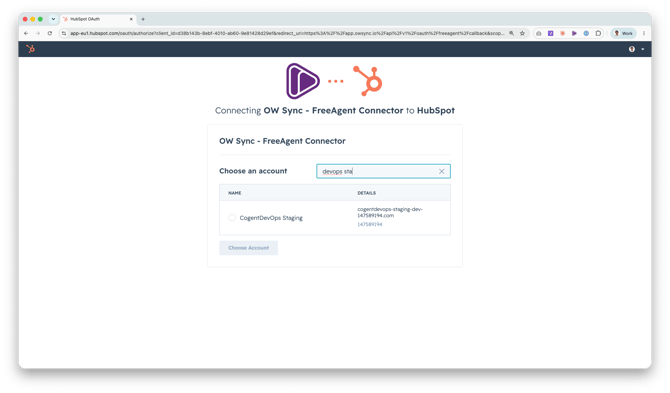
- Select your HubSpot account from the list. We recommend testing on a sandbox or test account before deploying to production.
- Review the permissions required by the app — these include access to your companies, contacts, and their property schemas — then click Connect app to proceed.
2. Account Setup
After connecting, you'll be guided through a setup wizard.
- Select Billing Contact: Choose a portal user who will be the primary billing contact for this account from the dropdown, then click Continue.
- Company Information: Enter your billing company details including domain, legal company name, street address, city, state/county, postal code, and country. This information will be used for invoicing. Click Continue to proceed.
3. Connect FreeAgent
Unlike connectors that require an API key, FreeAgent authenticates through OAuth — there's no key to copy or paste. Your access is granted securely by signing in to FreeAgent directly, and tokens are stored encrypted and refreshed automatically.
- Welcome to FreeAgent Connector: The onboarding wizard explains that you'll be redirected to FreeAgent to authorise access. Click Continue.
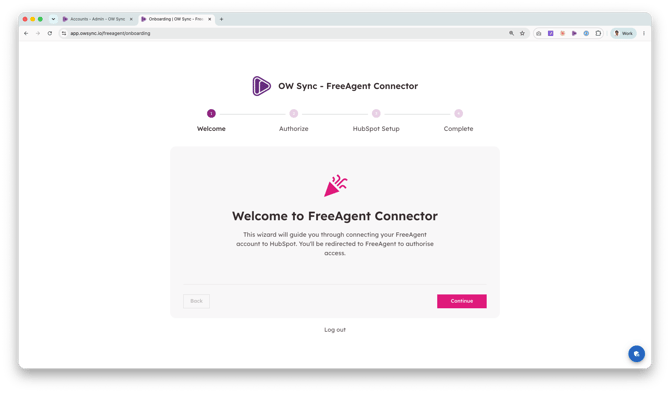
- Connect with FreeAgent: FreeAgent uses OAuth 2.0 authentication. The screen notes that you'll be redirected to FreeAgent to sign in. Click Continue to authorise OW Sync to access your FreeAgent account.
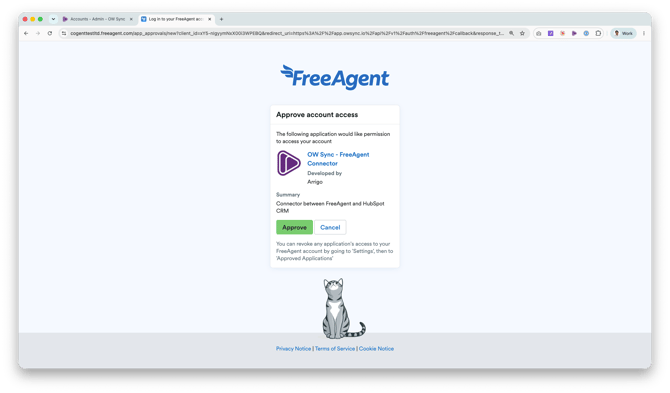
- Authorise on FreeAgent: You'll be redirected to FreeAgent's sign-in page. Log in with your FreeAgent credentials and approve access for OW Sync. Once authorised, you'll be returned to onboarding automatically.
4. HubSpot Setup — Choose Target Object
Choose where FreeAgent data will be stored in HubSpot. OW Sync will automatically create and manage the custom properties needed to hold your data. For FreeAgent contacts, you have two options:
- Companies (Recommended) — Store each FreeAgent contact as a HubSpot Company. Best when FreeAgent contacts represent businesses you track as companies.
- Contacts — Store each FreeAgent contact as a HubSpot Contact. Names, phone and mobile map to native contact fields; the email is kept on a custom property so it never overwrites a contact's primary email.
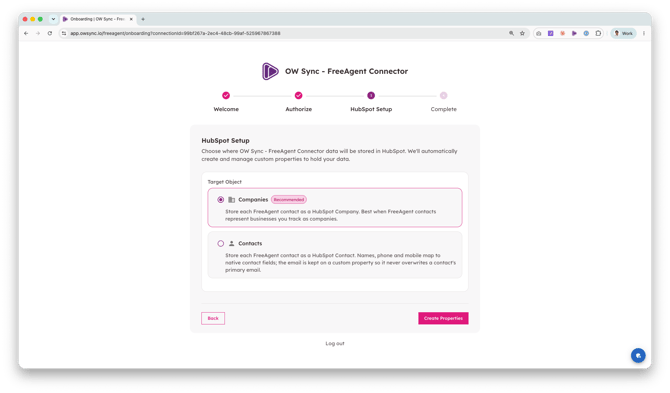
- Click Create Properties to proceed. OW Sync will create and manage the custom properties for your invoices, credit notes, and chosen contact object.
5. Finish Onboarding
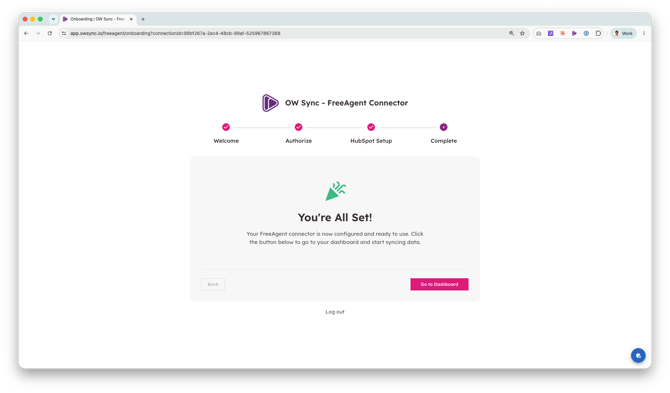
- Once properties are created, you'll see the All set! screen confirming your FreeAgent connector is configured and ready to use. Click Go to Dashboard to enter the app.
6. Review Your Sync Configuration
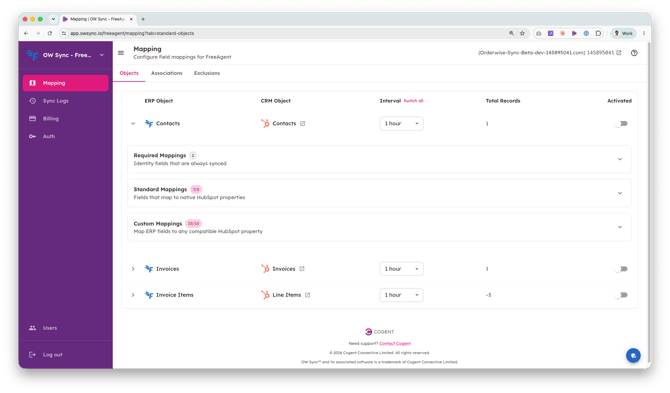
- After onboarding, you'll land in the OW Sync app. The Mapping page shows your pre-configured sync pairs. For FreeAgent these are set up for you and run automatically — there's nothing to toggle on:
- FreeAgent Contacts → HubSpot Companies (or Contacts, depending on the choice you made in step 4)
- FreeAgent Invoices → HubSpot Invoices
- FreeAgent Invoice Items → HubSpot Line Items
- Each pair syncs from FreeAgent into HubSpot on a recurring hourly schedule.
7. Review Sync History
- Navigate to Sync Logs in the left sidebar to view synchronization history.
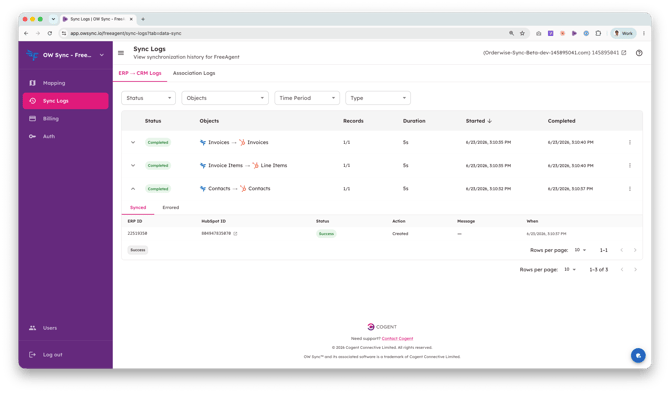
- The first sync will begin shortly after onboarding completes. Subsequent syncs run automatically on a recurring schedule.
8. Verify in HubSpot
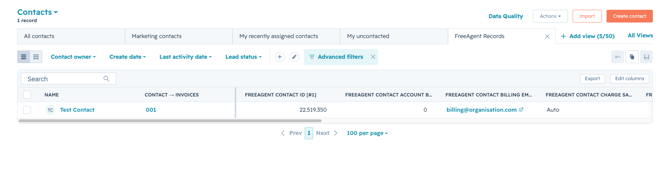
- Once the sync completes, navigate to your HubSpot Companies (or Contacts, depending on your setup) and Invoices to verify the data.
- You should see FreeAgent records with all mapped fields populated, and FreeAgent invoices on the native HubSpot Invoice object with their line items.
This guide will be updated with new functionality, object types, and synchronization options as they become available. Visit the OW Sync website for the latest features, or contact the Cogent team with any questions not covered here.